Mattress Shopping Guide
Shopping for Naturepedic Organic Mattresses in Detroit: What to Ask
A showroom visit can tell you a great deal about how a mattress feels, and rather less about what is inside it. If you are comparing Naturepedic organic mattresses in Detroit, arrive with questions about materials, support, fit, and the practical terms that will matter once the mattress is home.
Buying a mattress is one of those errands that begins with the body and ends with a tape measure, a delivery window, and—if all goes well—a better night’s sleep. In a store, under polite lighting, the differences between models can seem subtle. A minute on your back may make one surface feel inviting; five minutes on your side may reveal a pressure point you had not noticed. Labels, meanwhile, introduce their own vocabulary: organic, certified, supportive, breathable, natural. The useful task is not to be impressed by the words, but to ask what they mean for the particular mattress in front of you.
That is especially true when shopping for an organic mattress. Materials and certifications deserve careful attention, but so do firmness, foundation compatibility, delivery arrangements, and the rules for trying a mattress at home. A little preparation can make a Detroit store visit less like a test of salesmanship and more like a practical investigation.
Begin with your own sleep, not the product label
Before you visit a retailer, make a short note of how you sleep and what you would like to change. Do you spend most of the night on your side, on your back, or on your stomach? Do you wake with pressure at the shoulder or hip, feel that your lower back is unsupported, or find that you sleep too warm? Is your current mattress simply worn out, or has it never suited you particularly well?
These observations are more useful than a single-word verdict such as “soft” or “firm.” Two people can call the same mattress firm and mean entirely different things. One may be describing a taut surface; another may mean that their hips do not sink too far. Explain the experience you want to improve, and ask the salesperson to show you how the mattress is constructed to address it. A mattress cannot diagnose pain or treat a medical condition, but its support and pressure distribution can affect how comfortable you feel while resting.
Bring the basic facts about your bed as well: mattress size, bed-frame type, foundation or platform, and approximate depth available beneath the headboard or in the room. If two people will share the bed, both should ideally take part in testing. Differences in body size, preferred position, and sensitivity to motion can make a mattress feel quite different from one side of the bed to the other.
- Sleep position: Identify the positions you spend most of the night in, not only the one you use when you first lie down.
- Comfort concerns: Note pressure, sinking, stiffness, heat, or movement that interrupts sleep.
- Bed setup: Record size, foundation type, frame details, and any height or access limitations.
- Shared use: Consider motion transfer, edge use, and whether partners have different comfort preferences.
Ask what “organic” means in this specific mattress
“Organic mattress” is a useful starting point for a conversation, not a complete description of construction. A mattress may contain several materials, each serving a different purpose: a surface fabric, batting or cushioning, a support core, and sometimes additional layers between them. Ask the retailer to identify the materials in each part of the model you are considering. If a description says “organic cotton,” clarify whether it refers to the cover, the filling, or both.
For a Naturepedic model, ask which components are present in that exact version and how they are assembled. Do not assume that every mattress in a brand’s range uses the same recipe, firmness, or support system. Product names can be similar while construction differs. A clear answer should connect a material to its location and purpose: what you touch, what cushions the body, and what carries most of the load.
Certifications also merit a precise question. Ask which independent certification applies to which material or finished component, and whether the retailer can show current documentation or point you to the manufacturer’s specification. A certification is not a general promise that every feature of a product is identical, nor does one certification automatically answer every question about sourcing, emissions, durability, or care. The important thing is to understand the scope of the claim rather than rely on a broad word printed on a tag.
You might ask, “Can you show me the materials list for this exact model?” Then follow with: “Which parts are certified, and what does that certification cover?” If you are sensitive to particular substances or have a specific health concern, describe it plainly and ask for product documentation. A salesperson can explain the mattress, but should not be expected to provide medical advice.
Materials should be considered as a system. Organic cotton may contribute to the feel of a cover; wool, if present, may be used in upholstery or as part of a design intended to meet flammability requirements; coils or other support components determine a different set of performance characteristics. The presence of a natural or organic material does not, by itself, tell you whether the mattress will feel right, sleep cool for you, or last as long as you hope. Those are separate questions, best answered through construction details, a careful test, and clear terms of purchase.
Find out how the mattress is built
Construction is the bridge between a materials list and the experience of lying down. Ask whether the mattress uses coils, foam, latex, or a combination, and where each layer sits. If it has a coil system, ask whether the coils are individually wrapped or connected, and what role any upper cushioning or microcoil layer plays. If the model has foam, ask about its placement and feel, rather than treating “foam” as a single, uniform material.
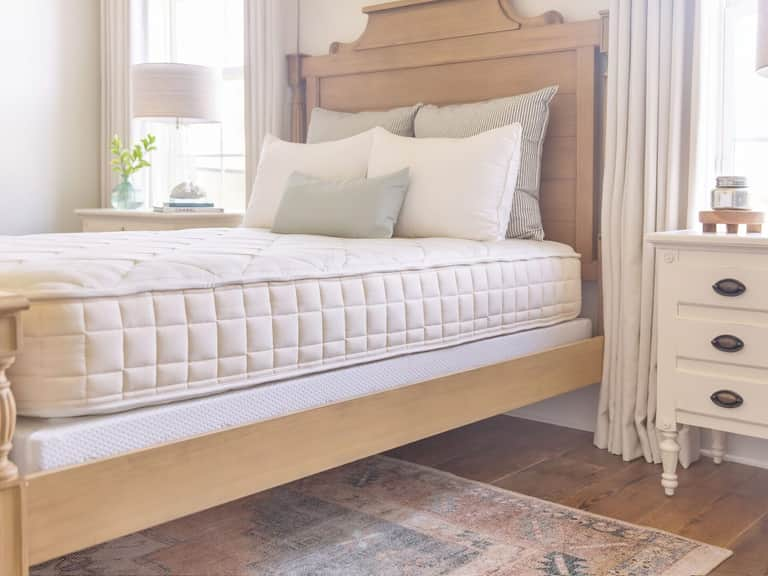
The Naturepedic Chorus Organic Cotton Mattress, for example, is described as a 10-inch innerspring mattress with organic cotton, organic wool, PLA fiber, and individually nested springs made without glues or adhesives. Its construction includes a microcoil layer over encased coils, intended to provide cushioning and airflow. These details are worth treating as a starting point for questions, not a guarantee that every sleeper will find the mattress comfortable. Ask to confirm that the floor model and the product you would order are the same configuration, and request the current specifications in writing.
It is also reasonable to ask how the mattress meets applicable flammability requirements and what materials or design features are used to do so. The answer should be specific and should match the product documentation. If a claim is important to your decision, do not settle for an ambiguous phrase; ask where it appears in the manufacturer’s materials.
Finally, ask what the mattress is not. Is the cover removable? Can it be washed, or is spot cleaning the only recommended care? Is the mattress reversible or one-sided? Does it require rotation, and how often? These plain maintenance questions can prevent an unpleasant surprise after a spill, a move, or several months of use.
Test firmness with patience—and your usual position
Firmness is often presented as a tidy scale, but it is partly a matter of perception. Body weight, shape, sleep position, and personal preference all influence how a surface feels. A “medium firm” mattress does not promise the same sensation to every person, and a number on a showroom card cannot substitute for lying down.
When you test a mattress, use the position in which you normally fall asleep. Give your body several minutes to settle. If you sleep on your side, notice whether your shoulder and hip feel compressed or whether the surface lets them settle comfortably while keeping the rest of your body supported. On your back, pay attention to whether your lower back feels unsupported or whether your hips seem to sink excessively. Stomach sleepers may be especially attentive to whether the midsection drops into the mattress. These are practical observations, not a clinical assessment.
Try to relax rather than perch on the edge and pronounce judgment. A showroom visit cannot reproduce a full night, but a deliberate test is better than a quick bounce. If you share the bed, lie down at the same time and notice whether ordinary movement travels across the surface. Sit near the edge if you use that area to get dressed or rise from bed, and ask how the edge support is designed.
Change position as you would at home. A mattress that feels pleasant for a moment on your back may become less comfortable when you turn onto your side. If you use a particular pillow, bringing it—or a pillow of similar height—may make comparison more meaningful, because pillow loft affects head and neck alignment. Wear comfortable clothing and take notes between models. After several mattresses, impressions tend to blur; “the second one felt better for my shoulder” is more actionable than “one of them was nice.”
Understand the trial, return, and warranty terms
A showroom test is an introduction. The real assessment happens at home, across ordinary nights in your own bedroom. Before placing an order, ask whether a sleep trial is available and get the terms in writing. How many nights must pass before a return or exchange can be requested? Is there a required adjustment period? Are pickup, restocking, or return fees charged? Does the retailer offer an exchange rather than a refund, and can the mattress be returned if it has been stained or damaged?
These details vary by retailer and by model. Do not assume that a manufacturer’s warranty is the same as a comfort trial. A warranty generally addresses certain defects under defined conditions; it is not a promise that you will prefer the feel. Ask how long the warranty lasts, whether it is limited, what conditions could affect coverage, and who handles a claim. Request the warranty document rather than relying on a summary spoken at the point of sale.
Also ask how the mattress should be protected during the trial. A protector may be required to keep return eligibility, and the wrong protector can change the surface feel or interfere with airflow. Check the mattress care instructions and the retailer’s policy before choosing one. Keep your receipt, order confirmation, model name, and policy documents together; a photograph or copy of the product specification can help if names or configurations later become confusing.
There is no need to make a decision simply because a salesperson has demonstrated a feature or prepared a quote. A good comparison includes time to read the terms, confirm the model, and discuss the choice with anyone sharing the bed. If an answer is unclear, ask for clarification before paying.
Check the foundation and the delivery details
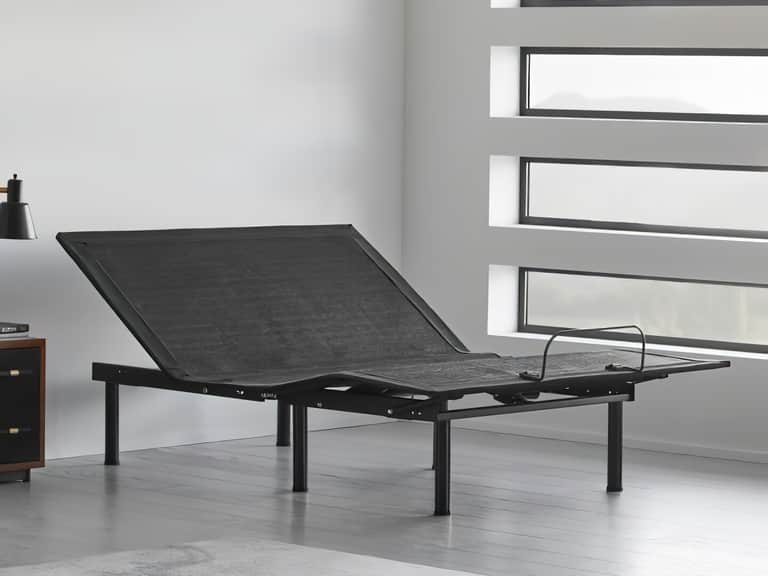
A mattress is not an isolated object; it rests on a foundation, frame, or adjustable base. Ask which support systems are approved for the model and whether the existing setup meets the manufacturer’s requirements. A foundation with inadequate support or unsuitable spacing may affect performance and could complicate a warranty claim. If you use slats, find out the required spacing and whether a center support is needed for your size of bed. If you have an adjustable base, confirm that the exact mattress model is compatible, rather than relying on a general assumption about the brand.
For the Chorus, product information lists compatibility with an adjustable base and describes Naturepedic foundations as an option. Still, verify the arrangement for the size and configuration you plan to buy. Foundations may be available in different heights; a lower profile can change the finished bed height, while a taller base can make getting in and out easier for some people and less convenient for others. Measure the current bed and consider the height of the mattress, foundation, frame, and bedding together.
Delivery in Detroit deserves its own set of questions. Ask what the quoted delivery service includes, whether there is a charge for your address, and whether the crew will bring the mattress into the bedroom or leave it at a doorway. Confirm whether old-mattress removal is available and whether it carries an extra fee. Find out how delivery appointments are scheduled, what happens if access is difficult, and whether narrow stairways, elevators, or long hallways create restrictions.
The Chorus is described as compressed and roll-packed for shipping and setup. Ask how it will arrive in your specific order, how many people are needed to move it, and what the retailer recommends during unpacking. If you select a different Naturepedic model, do not assume that it uses the same packaging or delivery method. Confirm the logistics for the exact mattress you are purchasing.
Compare like with like
When two mattresses are both called organic, they may differ considerably in height, support system, comfort layers, firmness, care instructions, and price. Ask the retailer to compare the specific models on those points rather than on a single broad claim. A simple comparison sheet can keep the conversation grounded.
| What to compare | Questions to ask |
|---|---|
| Materials | What is in the cover, comfort layers, and support core? Which components are certified? |
| Construction | Does it use coils, foam, latex, or other layers? How do those parts work together? |
| Feel and support | What firmness is stated, and how does the model feel in my usual sleep position? |
| Care | Can the cover be removed? What cleaning, rotation, or protection is recommended? |
| Fit | Is it compatible with my frame or base, and what is the finished bed height? |
| Purchase terms | What are the trial, return, exchange, warranty, delivery, and removal terms? |
Price should be considered alongside the complete cost of getting the mattress into service: foundation, delivery, setup, removal of the old bed, and any required accessories. Ask for an itemized quote. If a sale is involved, confirm its end date and whether the quoted price applies to your chosen size. These are unglamorous questions, but unglamorous questions are often the ones that make a purchase feel settled afterward.
A short checklist for your Detroit showroom visit
Save these questions on your phone or bring them on paper. You do not need to ask them all in one breath; the list is a way to ensure that the important details have not disappeared beneath the more memorable feel of the mattress.
- What materials make up this exact Naturepedic model, layer by layer?
- Which materials or components are certified, and can I review the relevant documentation?
- How is the support core constructed, and what does each comfort layer do?
- What firmness is stated, and what should I notice when testing it in my usual sleep position?
- Is the model suitable for my existing frame, foundation, or adjustable base?
- What are the care instructions, and is the cover removable or washable?
- How does the at-home trial work, including minimum use, fees, exchanges, and pickup?
- What does the warranty cover, and what conditions must I meet?
- What are the delivery, setup, and old-mattress removal charges for my Detroit address?
- Can I take home the written quote, product specifications, and policy documents?
Make the decision at a human pace
The best mattress choice is not necessarily the one with the longest list of materials, the most technical description, or the most persuasive showroom story. It is the one whose construction and feel make sense for your body, whose terms are clear, and whose dimensions suit the bed you already have—or the bedroom you are planning. Organic materials may be a central priority for you; support, temperature, upkeep, or budget may be equally important. A thoughtful purchase makes room for all of those considerations without pretending that one feature answers every question.
After your visit, compare your notes before comparing your memories. Confirm the model name, size, firmness, and specification on the quote. Read the trial and warranty terms at home, where you can do so without hurry. If a detail has changed between the showroom conversation and the paperwork, ask the retailer to resolve it before ordering.
Detroit mattress shopping need not become an endurance exercise in retail language. Go in knowing how you sleep, test patiently, and ask what is inside the mattress as well as what happens if it does not work for you. The result may not make the purchase dramatic. That is part of its appeal: after the delivery truck has gone and the bedroom has gone quiet, the most important decision is the one you no longer have to think about.